 Browser Extensions
How Chrome Extension Development for E-commerce Led to Increased Sales
A short case study on building a custom browser tool for an online store, and the increased e-commerce sales it produced by putting a price advantage in front of buyers.
A fair number of online stores are in a lucky but frustrating position: they’re genuinely cheaper than their competitors and simply can’t get shoppers to notice. If that’s you, you’re sitting on one of the most underused assets in retail, and a well-scoped piece of Chrome extension development for e-commerce can be one of the highest-return ways to turn it into sales.
I recently built one for a retailer in the automotive aftermarket (car parts), and the project is a clean illustration of when this works, the one design decision that made or broke it, and the kind of return you can realistically expect.
The e-commerce sales problem: an invisible price advantage
My client sells car parts online and consistently beats their larger competitors on price, especially for their enterprise accounts: the workshops and resellers who order in large quantities. The problem was a familiar one. Those buyers were already comfortable on a competitor’s site, building big orders there out of habit. The price advantage existed; it just wasn’t visible at the moment of purchase.
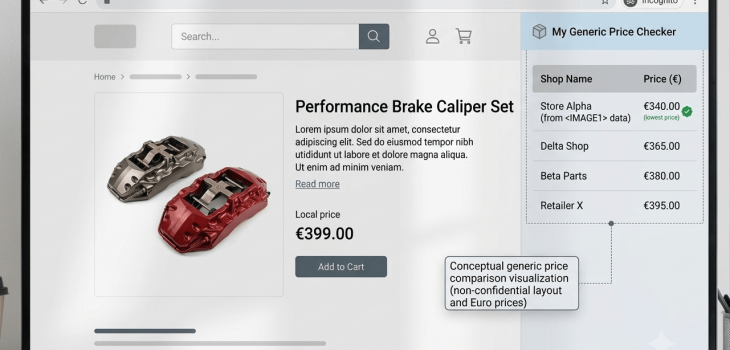
The brief was simple to state: show our customers, while they’re shopping, that the exact same parts cost less with us.
The decision that mattered: a sidebar, not the competitor’s page
The solution was a Chrome plugin, and the client’s first instinct was to have it show their prices right on the competitor’s own pages, so the comparison would look like a native part of the site.
I pushed back, and this turned out to be the single most important call of the project.
Anything you place on a page that someone else controls, they can see, detect, and remove. They can change their markup overnight and break your integration. It’s their turf, and on their turf you lose eventually.
A browser sidebar is the opposite. It’s rendered by the browser itself, in a context the website can’t reach into. The competitor’s code can’t read it, can’t touch it, and can’t even tell it’s there. So I moved the actual price comparison into a sidebar and left the competitor’s page almost untouched. The only thing we placed on their site was a single button to open it.
That distinction stopped being theoretical very quickly. The competitor noticed the extension and decided to fight it. Because the one thing we’d added was that button, they had something to detect, and they retaliated by blocking users from viewing their own orders, throwing up an error message telling them to uninstall our plugin.
The fix took an afternoon: we removed the button. With nothing left on their page, there was nothing for them to detect and nothing to fight. The comparison kept working in the sidebar exactly as before, and the competitor has had no way to interfere since.
The lesson generalizes well beyond this project: keep your footprint off any surface you don’t control. The less you place on someone else’s page, the less they can do to stop you. The approach that looks more elegant, placing your content directly on their page, is actually the fragile one.
The investment, and the increased e-commerce sales it drove
This is the part I most want online store owners to hear.
A focused, well-scoped extension like this is not a big investment. Realistically, a build like this takes no more than two months. For a company with a real product and real customers, that’s a rounding error.
The return is a different order of magnitude. The extension didn’t just win a handful of orders. It taught a whole base of buyers, permanently, that this store is the cheaper option. Once a workshop learns it’s been overpaying elsewhere, that knowledge sticks and changes where they buy by default. You’re not paying per click or per conversion; you’re installing a durable shift in buying behavior. That is why the increased e-commerce sales from a tool like this dwarf what it costs to build, as long as you actually have the price advantage to back it up.
It worked well enough that the client decided to roll it out to their branches in other countries, and the feedback there has been just as positive.
This category is already mainstream
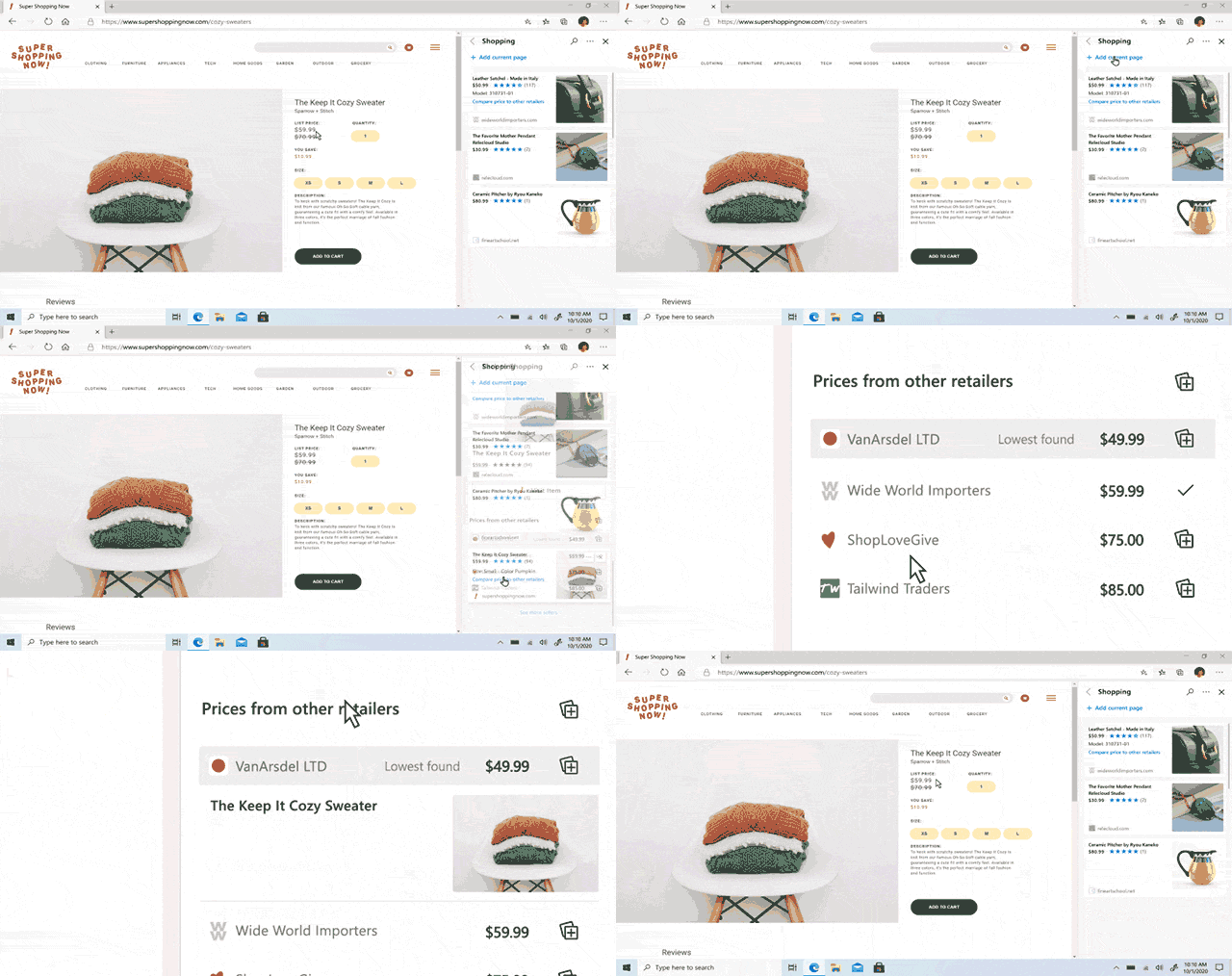
If this still sounds exotic, it isn’t. Microsoft Edge now ships price-comparison shopping tools built into the browser. It’ll quietly tell a shopper when the thing they’re looking at is available cheaper somewhere else, and it does it from a sidebar, no extension required. The big platforms have already decided that surfacing better prices at the point of decision is valuable. The only open question is whether the price they surface is going to be yours.
When Chrome extension development makes sense for your store
A browser extension is a strong fit if a few things are true:
- You have a real, defensible price advantage. This is non-negotiable. An extension that advertises that you’re more expensive is a great way to lose customers faster. The tool only amplifies what’s already true.
- Your customers actively comparison-shop, ideally on a small number of well-known competitor sites.
- You have repeat or high-value buyers (B2B, bulk, or subscription) where changing one purchasing decision pays off many times over.
If that describes your business, you’re probably leaving money on the table that a modest, focused build could recover.
Conclusion
If you have a genuine price advantage, Chrome extension development for e-commerce is one of the cheapest ways to put it to work, and one of the most durable. You’re not renting attention with ads you have to keep paying for. You’re teaching your buyers, once, that you’re the better deal, and letting that reshape where they shop. The build is small, and the architecture is what keeps it resilient: stay in a sidebar, off any surface a competitor controls, and there’s very little they can do about it. The real barrier to increased e-commerce sales here is rarely technical. It’s deciding to put your best number in front of buyers at the exact moment they’re about to spend it somewhere else.